
The Languages of Opera: No Problem?
Opera is a very complex artform. It tells its stories not just theatrically, but also musically. Music has long been seen as a universal language, but where does that leave opera? Can it too be seen as a universal artform? How do the different ‘languages’ of the stage create meaning? And how accessible can this ‘universal’ language of opera be?
How is opera introduced and contextualised? And does the aspiration towards universality require us to rethink operatic practice, to broaden its audiences, or to reconsider the relationship between the two?Focusing on education and accessibility, we first approach the themes of language, music and universality from an ‘off-stage’ perspective. We examine education as the transmission – and transformation – of operatic and classical music knowledge across different audiences, with particular attention to younger spectators.
If some knowledge can be learned before we enter the theatre, some is then offered during the performance. What is the role of language in opera as a multilingual artform? How is its potential barrier dealt with in the operatic experience? We look at how subtitles take away one barrier regarding accessibility, while possibly creating another. And is its role purely functional, or does it also carry artistic or aesthetic meaning? We hope to shed light on this omnipresent but often overlooked component of the operatic practice.
This programme is part of the Opera Forward Festival 2026. The Opera Forward Festival Think Tank is an international group of students from across the Netherlands whose academic and artistic practices critically explore arts, culture, politics, identity, and performance.
Speakers
The members of the OFF Think Tank 2026: students of the Universities of Amsterdam, Maastricht and Rotterdam. Eros Chien, Satine Ogandzhanyan, Bob van Oosterhout, Yuankun Zhou (International Dramaturgy); Elspeth Knight (European Studies); Pejman Akbarzadeh, Nelle Engelsma, Marije Morren, Marleen Pereira (Musicology); Mala Bachmann (Music Studies); Yuhua Lee (Arts and Culture: Arts and Heritage); and Dina Nemirovsky (Arts and Culture Studies).
Krisztina Lajosi-Moore is a cultural historian and an associate professor of modern European culture in the Department of European Studies (University of Amsterdam). Her main expertise is the cultural history of opera, nationalism and transnationalism studies, with a special intersection between history, media, and political thought.
Bob van Oosterhout (moderator) is a student at the International Dramaturgy department of the University of Amsterdam, with a special interest in opera.
OFF Think Tank 2026
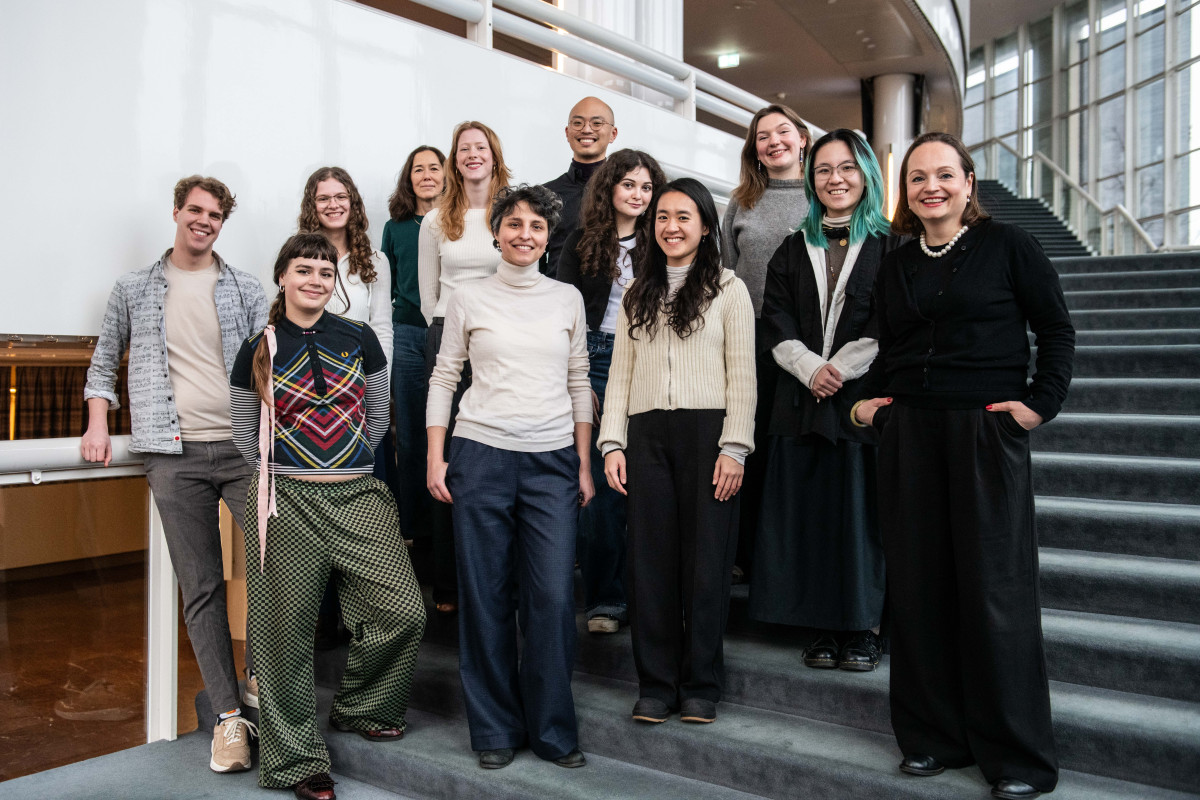
Picture by Bart Grietens
:rgb(-15,-3,-18)/https://admin.spui25.nl/wp-content/uploads/2026/02/nahrizul-kadri-OAsF0QMRWlA-unsplash.jpg)

:rgb(-25,-2,1)/https://admin.spui25.nl/wp-content/uploads/2026/02/Omslagfoto.jpg)

:rgb(8,-11,-35)/https://admin.spui25.nl/wp-content/uploads/2026/03/pelicot.png)
