
Art, Technology, and Intimacy: Writing Fiction in the Sharing Economy
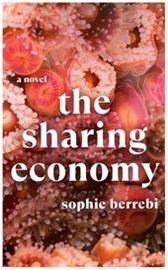
In her debut novel The Sharing Economy (Gedeelde liefde in Dutch) Sophie Berrebi brings together art, social media, and love, and explores various, modern modes of intimacy. She will discuss her book and the ways we view relationships with cultural theorist Pınar Türer and author Ilse Josepha Lazaroms.
In The Sharing Economy, Sophie Berrebi introduces us to Gabrielle Bloom, who is 45, works in the art world and is married to Anton with whom she has a child and an open marriage. During a visit to a feminist art collective, she is introduced to a new dating app that has recently launched in the city. With an almost unlimited number of potential partners suddenly available to her, she quickly develops a taste for the thrill of a brief sexual encounter. Set during one intense and transformative year and suffused with art, sex and theory, The Sharing Economy is a uniquely radical reappraisal of the way we view relationships.
Together with cultural theorist Pınar Türer and author Ilse Josepha Lazaroms, Sophie Berrebi will discuss her new book and its themes of art, technology, and intimacy. Furthermore, Berrebi being an academic debuting in the world of fiction, our panel will discuss the intimacies and intricacies that characterise diverse creative spaces.
About the speakers
Sophie Berrebi is an author, scholar and curator. Based in the department of art history at the University of Amsterdam, she is the author of The Shape of Evidence, Contemporary Art and the Document (2015), and of Dubuffet and the City: People, Place and Urban Space (2018), and most recently the curator of Seventy Years of The Second Sex, a Conversation between Works and Words (Hauser & Wirth, Zürich, 2022). The Sharing Economy (Scribner 2023) is her first novel.
Pınar Türer is a writer and researcher based in Amsterdam. She is currently a PhD candidate at ASCA, University of Amsterdam, where she also teaches in the philosophy department. Thinking with literature and art from a transnational perspective, she researches how the ethical, aesthetic, and epistemic sensibilities at work in intimacy can be reimagined along feminist and anti-colonial lines of thought in the present. Other interests include feminist pedagogies; erotics, senses, and movement; intimate methodologies in research, and in artistic and literary production.
Ilse Josepha Lazaroms (moderator) is a bilingual writer of fiction and nonfiction, and the author of Duet (Cossee) and Elsewhere (forthcoming with Atlas Contact in summer 2024). She is the founder of Azarel Press and a regular contributor to the Dutch Review of Books, De Groene Amsterdammer and De Correspondent, where she writes about literature, feminist and queer issues, (single) motherhood and social justice, and academia and itinerancy. She holds a PhD in Jewish studies from the European University Institute in Florence.

:rgb(-15,-3,-18)/https://admin.spui25.nl/wp-content/uploads/2026/02/nahrizul-kadri-OAsF0QMRWlA-unsplash.jpg)

:rgb(-25,-2,1)/https://admin.spui25.nl/wp-content/uploads/2025/10/Pushkino-Style-a-co-creation-by-Wapke-Feenstra-from-Myvillages.-Photocredits-Myvillages-2021.jpg)

:rgb(8,-11,-35)/https://admin.spui25.nl/wp-content/uploads/2025/09/Cover-2.jpg)
